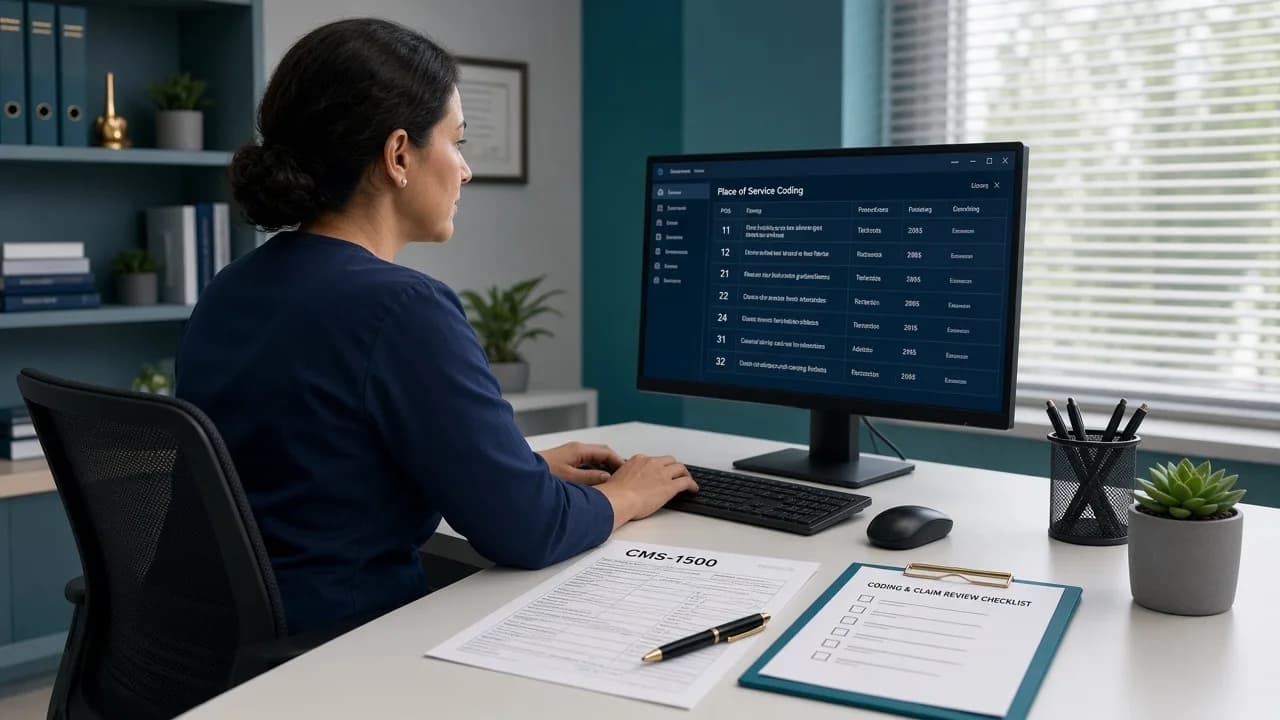
A 15% payment difference on every qualifying visit adds up fast — and so does audit risk when incident-to rules are guessed instead of documented.
Incident-to billing lets certain services furnished by auxiliary personnel or non-physician practitioners be billed under a supervising physician’s NPI at 100% of the Medicare Physician Fee Schedule, instead of the typical 85% NPP rate. Practices searching this topic in 2026 are usually optimizing advanced practice provider (APP) revenue, updating supervision policies after CMS made virtual direct supervision permanent for many services, or tightening compliance after an audit scare.
This guide explains incident-to billing in medical billing, the core Medicare requirements, what changed for 2026 supervision, when to bill under the NPP’s own NPI instead, and a practical compliance checklist.
Quick Answer
Incident-to is a Medicare billing provision that allows qualifying services to be reported under the supervising physician’s NPI when all regulatory conditions are met.
A compliant incident-to workflow should:
- Confirm the patient is established and under an active physician-initiated plan of care
- Limit incident-to to follow-up of that established problem — not new problems
- Satisfy direct supervision requirements for the encounter type and setting
- Use office / noninstitutional settings when required
- Document who furnished the service and who supervised
- Bill under the NPP’s NPI at 85% when any incident-to condition fails
- Exclude services with global surgery indicators 010 or 090 from virtual direct supervision assumptions
Incident-to is a privilege with conditions — not a default for every APP visit.
Table of Contents
- What Incident-To Billing Means
- Core Medicare Requirements
- 2026 Virtual Direct Supervision Update
- When Not to Bill Incident-To
- How to Operationalize Incident-To Safely
- Compliance Checklist
- When Support May Help
- FAQs
What Is Incident-To Billing?
Incident-to services are integral, though incidental, parts of a physician’s (or certain nonphysician practitioners’) professional services. When Medicare’s conditions are met, the claim can be submitted as if the supervising practitioner personally furnished the service, typically at 100% of the Physician Fee Schedule amount.
That is why incident-to shows up in every high-intent search around APP productivity, primary care margins, and outpatient compliance. Related reading: E/M coding, place of service codes, credentialing vs enrollment, and billing audit checklist.
Commercial payers do not always mirror Medicare incident-to rules. Build a payer matrix instead of assuming one national workflow.
Core Medicare Incident-To Requirements
Exact fact patterns vary, but practices should treat these as non-negotiable gates before billing under the physician NPI:
1. Established Patient and Established Plan
The physician (or qualifying practitioner) generally must have personally performed an initial service and established the plan of care. Incident-to is for carrying out that ongoing plan — not launching a brand-new workup under the physician’s number.
2. Integral, Incidental Service
The service must be commonly furnished in a physician office and an integral part of the course of treatment.
3. Direct Supervision
Direct supervision has historically meant the supervising practitioner is present in the office suite and immediately available. For 2026, CMS permanently allows certain direct supervision through real-time audio-video telecommunications for many applicable services (details below).
4. Correct Setting
Classic incident-to E/M billing is an office / noninstitutional concept. Hospital and many facility settings follow different rules. Wrong POS is a common failure point.
5. Employment / Auxiliary Relationship
Auxiliary personnel must meet the payer’s relationship and scope-of-practice requirements. State licensure and supervision laws still apply.
6. Billing Identity and Documentation
Claims billed incident-to are submitted under the supervising practitioner’s billing identity, but the record must still show who performed the service and that supervision requirements were met. Documentation gaps are what turn revenue optimization into False Claims risk.
What Changed in 2026: Virtual Direct Supervision
Under the CY 2026 Medicare Physician Fee Schedule final rule, CMS permanently adopted a definition of direct supervision that allows the supervising practitioner to be immediately available through real-time audio and visual interactive telecommunications for many services that require direct supervision — including applicable incident-to services under 42 CFR 410.26, plus certain diagnostic test and rehab contexts.
Critical limits practices must operationalize:
- Audio-only does not qualify for this virtual direct supervision definition
- Services with global surgery indicators 010 or 090 are carved out of the virtual direct supervision flexibility
- Policies can differ for specific benefit categories; verify the service type before relying on virtual supervision
- Commercial payer contracts may still require physical presence even when Medicare allows virtual availability
Update your compliance policy, EHR attestation language, and APP scheduling rules to reflect the 2026 definition — do not keep using expired PHE “temporary waiver” language.
When You Should Not Bill Incident-To
Bill under the NPP’s own NPI (typically 85% for Medicare) when any required condition fails. Common stop signs:
- New patient encounters
- Established patient with a new problem the physician has not evaluated and planned
- Supervising practitioner not available under the required supervision standard
- Wrong place of service / institutional setting where incident-to does not apply
- NPP independently changing the plan of care beyond incident-to boundaries
- Payer does not recognize incident-to or requires rendering NPP billing
Many compliance-conservative groups default to NPP billing and switch to incident-to only when every gate is verified. That can leave some revenue on the table — and still be the safer operating model if documentation controls are weak.
How to Operationalize Incident-To Without Creating Audit Fuel
1. Split Templates for New vs Established Problems
Force APPs and billers to flag “new problem today.” New problems should route to physician evaluation or NPP direct billing — not silent incident-to.
2. Capture Supervision Mode in the Chart
Document whether supervision was on-site or via real-time audio-video, who supervised, and that immediate availability was met. Vague “supervised by Dr. X” macros are weak evidence.
3. Align Scheduling With Supervision Reality
Do not schedule incident-to panels when no qualifying supervisor is available under your policy. Virtual supervision still requires real-time A/V readiness, not a page-later arrangement.
4. Separate Medicare Rules From Commercial Rules
Credentialing, rendering provider requirements, and mid-level payment policies differ widely. See credentialing vs payer enrollment.
5. Audit a Sample Monthly
Pull incident-to claims and verify patient status, problem continuity, setting, supervision, and note support. Feed failures into coder and APP education. Related: reducing coding errors and denial management.
Radiant RCM's Medical Billing Services, coding support, and Revenue Cycle Consulting help practices design incident-to workflows that protect both yield and compliance.
Incident-To Compliance Checklist
- Confirm payer actually allows incident-to for this plan
- Confirm patient is established under a physician-initiated plan of care
- Confirm today’s problem is part of that ongoing plan — not a new workup
- Confirm setting/POS supports incident-to billing
- Confirm direct supervision standard is met (on-site or qualifying real-time A/V)
- Do not assume virtual supervision for 010/090 global surgery services
- Document who performed care and who supervised
- Bill under NPP NPI when any requirement fails
- Keep a written incident-to policy updated for 2026 rules
- Audit monthly samples and track error themes by provider
When Outside Support May Help
Your practice may need help when:
- APP volume is rising but incident-to documentation is inconsistent
- 2026 virtual supervision was “assumed” without a written policy update
- New-problem visits are frequently billed under the physician NPI
- Commercial payers are denying or reclaiming mid-level claims
- Leadership wants compliant yield optimization, not risky auto-defaults
- Audit or payer review letters mention incident-to or supervision
Radiant RCM supports healthcare practices with medical billing, coding compliance workflows, denial prevention, and revenue cycle consulting.
Sensitive patient and insurance information should only be shared through approved and secure channels. Learn more about Radiant RCM's HIPAA compliance and information-handling approach.
Final Thoughts
Incident-to billing can improve outpatient yield when every condition is real and documented. In 2026, virtual direct supervision expands operational flexibility for many services — but it does not erase the established-patient, established-plan, setting, and documentation tests.
When in doubt, bill under the NPP NPI. Clean compliance beats aggressive assumptions.
If your APP billing mix is creating either missed revenue or compliance exposure, Radiant RCM can help. Request a demo to see how our billing and coding workflows keep incident-to claims accurate and defensible.
Frequently Asked Questions
What is incident-to billing in medical billing?
Incident-to is a Medicare provision that allows certain services furnished as an integral part of a physician’s professional services to be billed under the supervising physician’s NPI when all regulatory requirements are met, typically at 100% of the Physician Fee Schedule.
What is the payment difference between incident-to and NPP billing?
Qualifying incident-to claims are generally paid at 100% of the Medicare Physician Fee Schedule under the physician’s billing. When an NPP bills under their own NPI, Medicare typically pays about 85% for covered professional services.
Can direct supervision be virtual in 2026?
For many applicable services, CMS permanently allows direct supervision through real-time audio-video interactive telecommunications beginning in 2026. Audio-only does not qualify, and services with global surgery indicators 010 or 090 are excluded from that virtual direct supervision definition.
Can new patients be billed incident-to?
Generally no. Incident-to depends on an established course of treatment initiated by the physician (or qualifying practitioner). New patients usually must be billed under the rendering clinician’s own NPI until a qualifying plan is established.
What happens if a patient presents with a new problem?
A new problem typically breaks the incident-to path until the physician evaluates and establishes a plan. Those encounters are commonly billed under the NPP’s NPI or seen by the physician first.
Do commercial payers follow Medicare incident-to rules?
Not always. Some follow similar concepts; others require rendering NPP billing or have different supervision rules. Confirm each major payer’s policy before standardizing templates.
Privacy Notice: Please do not submit patient records, insurance information, medical details, claim files, or other protected health information through the public website form. Review the Radiant RCM Privacy Policy before submitting an inquiry.
This article provides general operational information. Incident-to requirements are governed by Medicare regulations and payer-specific policies that can change. Confirm current CMS manual guidance, the CY fee schedule rules, state scope-of-practice law, and commercial contracts before changing billing workflows.